Cybercrime has grown rapidly in Kenya as more people and businesses move online. While digital tools make work easier, they also create opportunities for attackers who want to steal data, money, or sensitive information. Many businesses only realize the importance of cybersecurity after an attack has already happened, which is often too late. Understanding the most common cyber threats in Kenya is the first step in protecting your systems and your customers.
This guide explains the cyber risks Kenyans face today, how they work, and the best ways to stay safe. Whether you run a small business or manage a large organization, you’ll learn practical ways to prevent attacks, reduce vulnerabilities, and improve your overall security posture.
Rising Cybercrime in Kenya
Kenya has become a major digital hub in East Africa. With fast internet, mobile money adoption, and increased online business activities, cybercriminals have more targets than ever. Businesses of all sizes, schools, SMEs, corporates, NGOs, and government offices face daily cyber risks.
Common reasons cybercrime is rising include:
- Widespread use of mobile and online banking
- Weak passwords and poor security practices
- Lack of cybersecurity training
- Cheap or outdated systems
- Increased use of public Wi-Fi
- Growth of remote work
A single cyber attack can lead to financial loss, damaged reputation, and downtime.
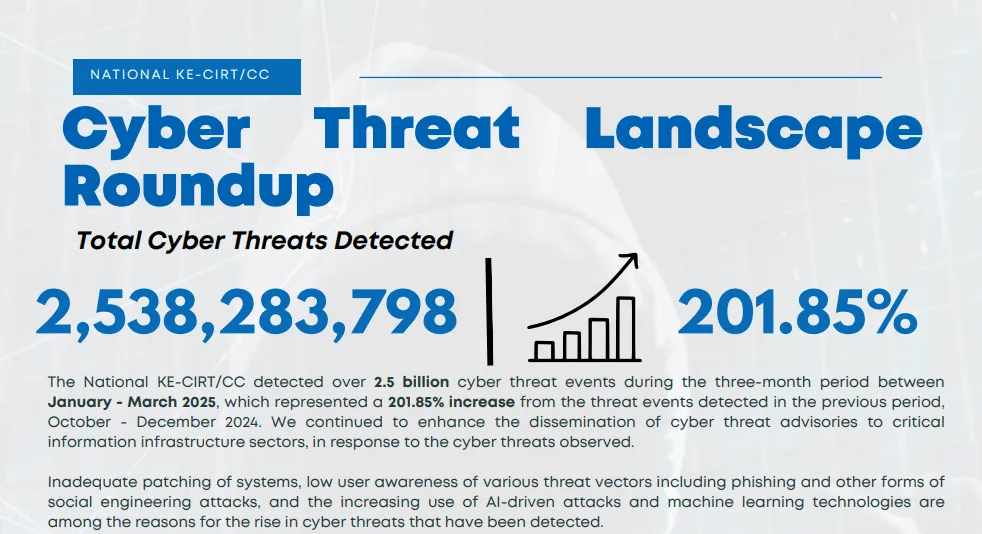
The Most Common Cyber Threats in Kenya
Phishing Attacks
Phishing is one of the biggest threats in Kenya. Attackers send fake messages pretending to be banks, delivery companies, Sacco agents, or government institutions. Their goal is to trick victims into sharing passwords, PINs, or personal information.
Typical signs of phishing:
- Messages urging “urgent action.”
- Strange links or attachments
- Requests for login details
- Poor grammar or suspicious email addresses
Phishing is dangerous because it targets human error.
Malware and Ransomware
Malware refers to harmful software installed without your knowledge. Ransomware is a type of malware that locks your files and demands payment to unlock them.
Common ways malware spreads:
- Infected email attachments
- Downloading cracked software
- Visiting unsafe websites
- Using infected flash drives
Ransomware attacks have increased in Kenya, especially against businesses storing sensitive data.
Social Engineering
Social engineering is when attackers trick people into revealing confidential information. They may pretend to be a co-worker, IT technician, HR officer, or bank representative.
Examples include:
- Fake support calls
- Impersonation messages
- Requests for passwords or OTP codes
Because this method targets people directly, it can bypass even the strongest security systems.

Business Email Compromise (BEC)
This attack targets organizations by hacking or spoofing email accounts. Criminals then send fraudulent messages requesting payments, changes to invoices, or confidential information.
Business Email Compromise is common in Kenya’s financial, real estate, and procurement sectors.
Mobile Money Fraud
Since Kenya relies heavily on M-Pesa and digital banking, attackers often try to trick users through:
- Fake reversal messages
- Payment request scams
- Fraudulent investment offers
- SIM-swap attacks
Many victims discover the fraud only after their money is gone.
Data Breaches
A data breach happens when unauthorized individuals access private information. This can expose:
- Customer data
- Credit card details
- Business records
- Employee information
Data breaches often occur due to weak passwords, unsecured systems, or poor access control.
Weak Password Attacks
Many Kenyans still use simple passwords like “123456”, “password”, or their phone numbers. Attackers use automated tools to guess weak passwords within seconds.
Weak passwords make systems extremely easy to compromise.
Public Wi-Fi Attacks
Free Wi-Fi in malls, cafes, and public transport is often unsecured. Attackers use these networks to intercept data such as:
- Login details
- Email content
- Banking information
Public Wi-Fi is convenient, but risky without precautions.
How Cyber Attacks Affect Kenyan Businesses
Cyber attacks can cause serious damage:
- Loss of customer trust
- Financial loss
- Website downtime
- Data corruption or theft
- Legal issues under the Data Protection Act
- Delays in daily operations
For small businesses, one serious attack can lead to closure.
How to Protect Yourself from Cyber Threats
Below are the most effective cybersecurity measures:
Use Strong Passwords and Two-Factor Authentication
Combine letters, numbers, and symbols. Avoid personal details. Two-factor authentication adds an extra layer of protection.
Train Staff Regularly
Accidents happen when employees don’t understand cyber risks. Training reduces mistakes.
Keep Systems Updated
Software updates fix vulnerabilities that attackers often exploit.
Install Reliable Security Tools
Use antivirus, firewalls, and anti-malware tools to block common threats.
Backup Your Data
Always keep offline and cloud backups. This protects you from ransomware.
Avoid Public Wi-Fi for Sensitive Tasks
Use mobile data or a VPN when accessing business systems.
Verify Messages Before Responding
Always confirm calls, requests, or payment changes through official channels.
Recommended Visuals
Suggested image files:
- cyber-threats-kenya-overview.png
- phishing-attacks-kenya.png
- cybersecurity–tips-for-businesses.png
Suggested alt text:
- “Common cyber threats in Kenya for businesses and individuals”
- “Phishing scams targeting Kenyan users”
- “Cybersecurity tips for Kenyan businesses to stay safe”
Compress images before uploading to improve website loading speed.

Final Thoughts
Cyber threats in Kenya are growing, but with the right security practices, you can protect your business and your customers. Understanding the risks, training your team, using strong passwords, and updating your systems will keep you ahead of attackers.
For expert cybersecurity solutions or secure website development, contact Vinarq Solutions.
Call 0745108788 or request a service quote today.